
 Plasma Cutting
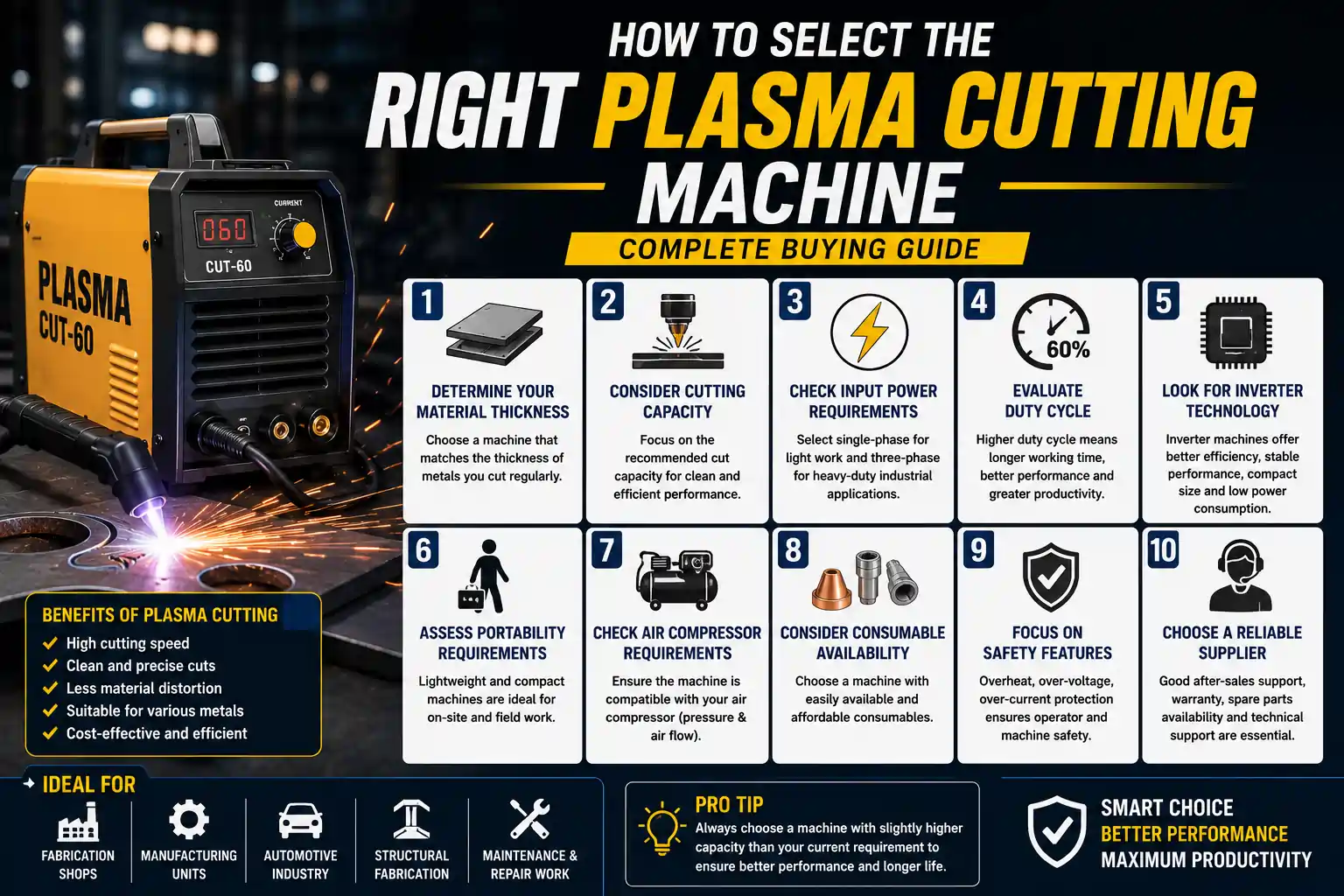
How to Select the Right Plasma Cutting Machine
Plasma cutting machines have become an essential tool in modern fabrication, manufacturing, automotive, and metalworking industries. They offer fast, precise, and clean cutting for a wide range of conductive metals, making them a preferred choice for professionals and industrial users. However, selecting the right plasma cutting machine can be challenging, especially with so many models and specifications available in the market. Choosing the wrong machine may result in reduced productivity, poor cut quality, and unnecessary costs. In this guide, we'll discuss the key factors you should consider before purchasing a plasma cutting machine. What is a Plasma Cutting Machine? A plasma cutting machine uses a high-velocity jet of ionized gas (plasma) to cut electrically conductive metals such as: Mild Steel Stainless Steel Aluminum Copper Brass Plasma cutting is widely used because it delivers accurate cuts with minimal material waste and faster processing speeds. 1. Determine Your Material Thickness The first step in selecting a plasma cutter is understanding the thickness of the material you will cut regularly. Light-Duty Applications Sheet metal work Automotive repairs Thin steel fabrication Recommended Capacity: Up to 10 mm Medium-Duty Applications Fabrication workshops Manufacturing units General industrial work Recommended Capacity: 10 mm to 25 mm Heavy-Duty Applications Structural steel fabrication Industrial production Heavy manufacturing Recommended Capacity: Above 25 mm Always choose a machine with a cutting capacity higher than your regular requirements for better performance and machine life. 2. Consider Cutting Capacity Manufacturers generally provide two ratings: Recommended Cut Capacity The thickness the machine can cut cleanly and efficiently. Maximum Cut Capacity The maximum thickness the machine can cut under ideal conditions. For best results, focus on the recommended cutting capacity rather than the maximum rating. 3. Check Input Power Requirements Plasma cutting machines are available in different power configurations. Single-Phase Machines Suitable for small workshops Home and light industrial use Easy installation Three-Phase Machines Suitable for heavy-duty industrial applications Higher cutting performance Continuous operation capability Choose a machine that matches your workshop's electrical setup. 4. Evaluate Duty Cycle Duty cycle indicates how long a machine can operate continuously within a 10-minute period. For example: 60% Duty Cycle = 6 minutes cutting + 4 minutes cooling 100% Duty Cycle = Continuous operation Industrial users should always prefer machines with higher duty cycles for better productivity. 5. Look for Inverter Technology Modern inverter plasma cutting machines offer several advantages: Lower power consumption Compact design Better cutting stability Lightweight portability Improved efficiency Inverter technology is ideal for both workshop and field applications. 6. Assess Portability Requirements If your work involves on-site fabrication or maintenance, portability becomes important. Look for: Compact design Lightweight construction Carry handles Durable metal body Portable plasma cutters are ideal for contractors and field technicians. 7. Check Air Compressor Requirements Most plasma cutters require compressed air to operate. Before purchasing: Verify required air pressure Check air flow requirements Ensure compatibility with your compressor Some machines also support built-in air compressor systems for greater convenience. 8. Consider Consumable Availability Plasma torches use consumables such as: Electrodes Nozzles Shield caps Swirl rings Choose a machine with easily available and affordable consumables to reduce operating costs. 9. Focus on Safety Features A quality plasma cutting machine should include: Overheat protection Over-voltage protection Under-voltage protection Over-current protection Automatic cooling systems These features improve safety and extend equipment life. 10. Choose a Reliable Supplier The quality of after-sales support is just as important as the machine itself. Select a supplier that offers: Technical support Genuine spare parts Warranty coverage Service assistance Product guidance Reliable support ensures long-term operational efficiency. Common Mistakes to Avoid When buying a plasma cutter, avoid these common mistakes: Choosing based on price alone Ignoring duty cycle ratings Underestimating material thickness requirements Buying machines with unavailable spare parts Overlooking power supply compatibility A well-informed decision can save both time and money. Conclusion Selecting the right plasma cutting machine requires careful evaluation of material thickness, cutting capacity, duty cycle, power requirements, portability, and safety features. Whether you're running a fabrication workshop, manufacturing facility, automotive repair center, or industrial operation, investing in the right plasma cutter will improve productivity, cut quality, and operational efficiency. Before making your final decision, assess your current and future cutting requirements to ensure maximum return on investment. For high-performance Plasma Cutting Machines, expert guidance, and reliable after-sales support, contact Optiweld Industry today.