
optiweld Industry

Menu

Blog

Home Blog
How to Select the Right Plasma Cutting Machine
Plasma Cutting
Jun 24, 2026
Admin

How to Select the Right Plasma Cutting Machine

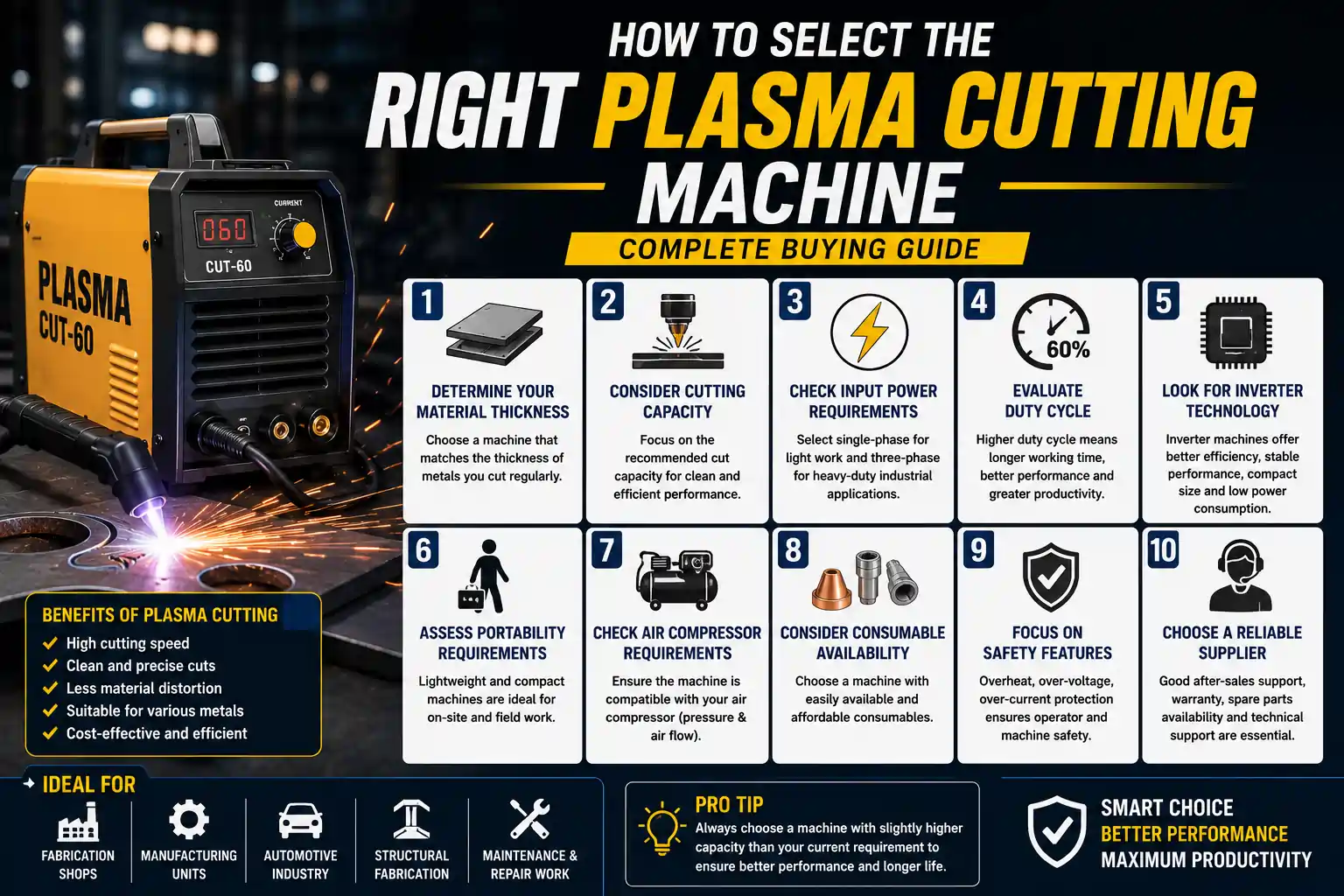
Plasma cutting machines have become an essential tool in modern fabrication, manufacturing, automotive, and metalworking industries. They offer fast, precise, and clean cutting for a wide range of conductive metals, making them a preferred choice for professionals and industrial users. However, selecting the right plasma cutting machine can be challenging, especially with so many models and specifications available in the market. Choosing the wrong machine may result in reduced productivity, poor cut quality, and unnecessary costs. In this guide, we'll discuss the key factors you should consider before purchasing a plasma cutting machine. What is a Plasma Cutting Machine? A plasma cutting machine uses a high-velocity jet of ionized gas (plasma) to cut electrically conductive metals such as: Mild Steel Stainless Steel Aluminum Copper Brass Plasma cutting is widely used because it delivers accurate cuts with minimal material waste and faster processing speeds. 1. Determine Your Material Thickness The first step in selecting a plasma cutter is understanding the thickness of the material you will cut regularly. Light-Duty Applications Sheet metal work Automotive repairs Thin steel fabrication Recommended Capacity: Up to 10 mm Medium-Duty Applications Fabrication workshops Manufacturing units General industrial work Recommended Capacity: 10 mm to 25 mm Heavy-Duty Applications Structural steel fabrication Industrial production Heavy manufacturing Recommended Capacity: Above 25 mm Always choose a machine with a cutting capacity higher than your regular requirements for better performance and machine life. 2. Consider Cutting Capacity Manufacturers generally provide two ratings: Recommended Cut Capacity The thickness the machine can cut cleanly and efficiently. Maximum Cut Capacity The maximum thickness the machine can cut under ideal conditions. For best results, focus on the recommended cutting capacity rather than the maximum rating. 3. Check Input Power Requirements Plasma cutting machines are available in different power configurations. Single-Phase Machines Suitable for small workshops Home and light industrial use Easy installation Three-Phase Machines Suitable for heavy-duty industrial applications Higher cutting performance Continuous operation capability Choose a machine that matches your workshop's electrical setup. 4. Evaluate Duty Cycle Duty cycle indicates how long a machine can operate continuously within a 10-minute period. For example: 60% Duty Cycle = 6 minutes cutting + 4 minutes cooling 100% Duty Cycle = Continuous operation Industrial users should always prefer machines with higher duty cycles for better productivity. 5. Look for Inverter Technology Modern inverter plasma cutting machines offer several advantages: Lower power consumption Compact design Better cutting stability Lightweight portability Improved efficiency Inverter technology is ideal for both workshop and field applications. 6. Assess Portability Requirements If your work involves on-site fabrication or maintenance, portability becomes important. Look for: Compact design Lightweight construction Carry handles Durable metal body Portable plasma cutters are ideal for contractors and field technicians. 7. Check Air Compressor Requirements Most plasma cutters require compressed air to operate. Before purchasing: Verify required air pressure Check air flow requirements Ensure compatibility with your compressor Some machines also support built-in air compressor systems for greater convenience. 8. Consider Consumable Availability Plasma torches use consumables such as: Electrodes Nozzles Shield caps Swirl rings Choose a machine with easily available and affordable consumables to reduce operating costs. 9. Focus on Safety Features A quality plasma cutting machine should include: Overheat protection Over-voltage protection Under-voltage protection Over-current protection Automatic cooling systems These features improve safety and extend equipment life. 10. Choose a Reliable Supplier The quality of after-sales support is just as important as the machine itself. Select a supplier that offers: Technical support Genuine spare parts Warranty coverage Service assistance Product guidance Reliable support ensures long-term operational efficiency. Common Mistakes to Avoid When buying a plasma cutter, avoid these common mistakes: Choosing based on price alone Ignoring duty cycle ratings Underestimating material thickness requirements Buying machines with unavailable spare parts Overlooking power supply compatibility A well-informed decision can save both time and money. Conclusion Selecting the right plasma cutting machine requires careful evaluation of material thickness, cutting capacity, duty cycle, power requirements, portability, and safety features. Whether you're running a fabrication workshop, manufacturing facility, automotive repair center, or industrial operation, investing in the right plasma cutter will improve productivity, cut quality, and operational efficiency. Before making your final decision, assess your current and future cutting requirements to ensure maximum return on investment. For high-performance Plasma Cutting Machines, expert guidance, and reliable after-sales support, contact Optiweld Industry today.
Read More 5 min read
Top 10 Welding Safety Tips for Industrial Workers
TIG Welding
Jun 24, 2026
Admin

Top 10 Welding Safety Tips for Industrial Workers

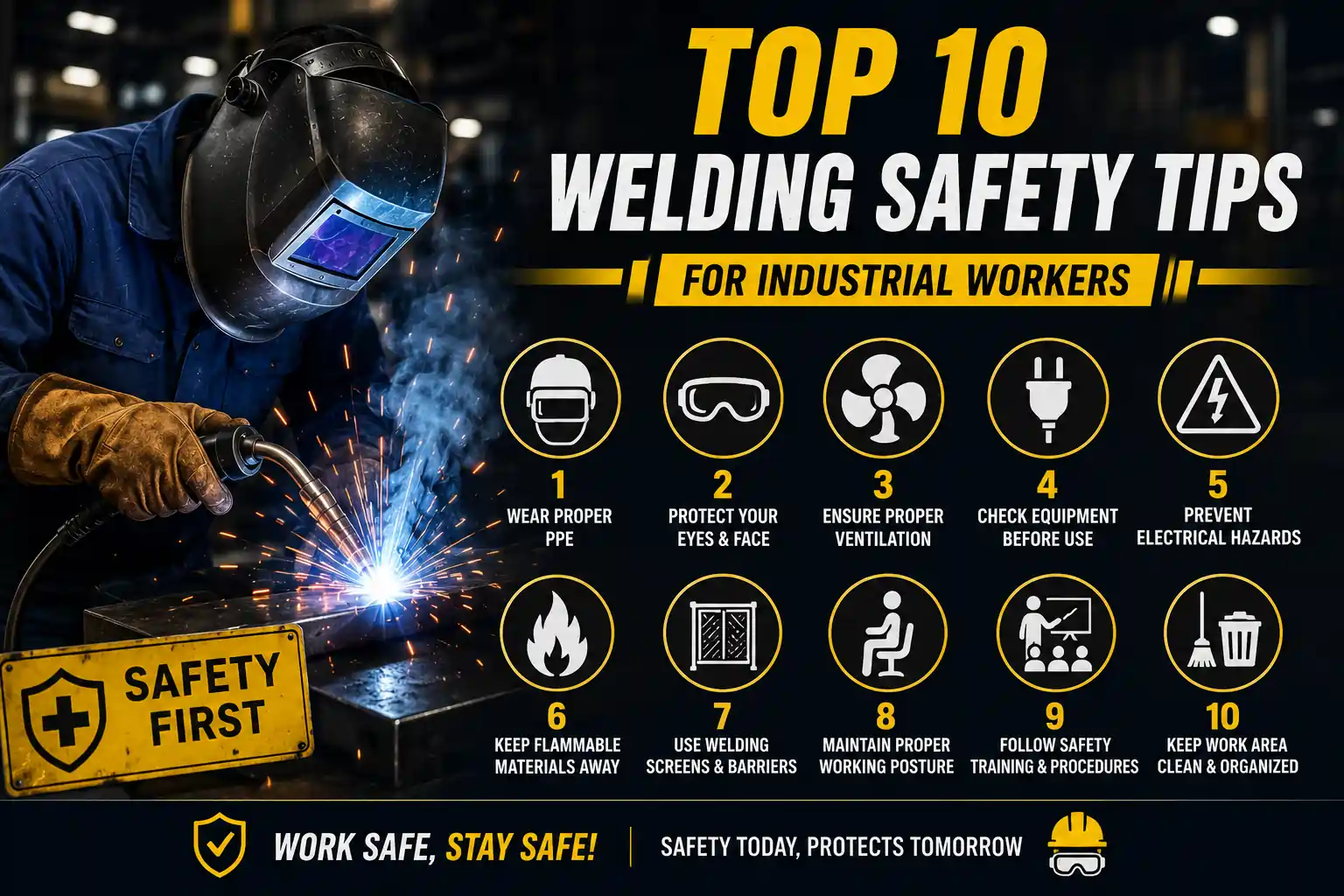
Welding is an essential process in construction, fabrication, manufacturing, and industrial maintenance. While welding offers numerous benefits, it also involves risks such as burns, electric shocks, harmful fumes, eye injuries, and fire hazards. Following proper safety practices is crucial for protecting workers and maintaining a safe work environment. In this guide, we'll discuss the top 10 welding safety tips that every industrial worker should follow. 1. Always Wear Proper Personal Protective Equipment (PPE) Personal Protective Equipment is the first line of defense against welding hazards. Every welder should wear: Welding helmet with proper shade lens Flame-resistant clothing Safety gloves Safety boots Safety goggles Ear protection when required Using the right PPE significantly reduces the risk of burns, sparks, and eye injuries. 2. Protect Your Eyes and Face The intense light produced during welding can cause serious eye damage, commonly known as "arc eye" or welder's flash. Always use a certified welding helmet with the correct lens shade and ensure that nearby workers are protected with welding screens or curtains. 3. Ensure Proper Ventilation Welding generates fumes and gases that may be harmful when inhaled over long periods. To maintain a safe working environment: Use exhaust ventilation systems Work in well-ventilated areas Use fume extraction equipment Wear respiratory protection when necessary Proper ventilation helps reduce exposure to hazardous fumes. 4. Inspect Equipment Before Use Before starting any welding job: Check cables and connectors Inspect electrode holders Verify machine settings Ensure gas hoses are leak-free Replace damaged components immediately Regular inspections help prevent equipment failures and accidents. 5. Prevent Electrical Hazards Electric shock is one of the most serious welding risks. To minimize the danger: Keep equipment properly grounded Avoid working in wet conditions Wear dry gloves and clothing Inspect electrical connections regularly Follow manufacturer safety instructions Safe electrical practices can prevent severe injuries and fatalities. 6. Keep Flammable Materials Away Welding sparks can travel several meters and ignite nearby combustible materials. Before welding: Remove flammable liquids Clear paper, wood, and cloth materials Keep fire extinguishers nearby Follow workplace fire safety procedures Maintaining a clean work area reduces fire risks significantly. 7. Use Welding Screens and Barriers Welding arcs emit ultraviolet (UV) and infrared (IR) radiation that can affect nearby workers. Installing welding screens and protective barriers helps: Prevent accidental eye exposure Improve workplace safety Create designated welding zones This simple step protects everyone in the work area. 8. Maintain Proper Working Posture Poor posture can lead to fatigue, muscle strain, and long-term injuries. Industrial workers should: Use adjustable workstations Avoid awkward positions Take regular breaks Use ergonomic equipment whenever possible Comfortable working conditions improve productivity and safety. 9. Follow Safety Training and Procedures Every welder should receive proper training before operating welding equipment. Workers must understand: Machine operation procedures Emergency response plans Fire prevention techniques PPE requirements Workplace safety regulations Continuous training helps reduce workplace accidents. 10. Keep the Work Area Clean and Organized A cluttered workspace increases the risk of slips, trips, and accidents. Good housekeeping practices include: Organizing tools properly Removing scrap materials Securing cables and hoses Cleaning welding debris regularly A clean workspace promotes safer and more efficient operations. Common Welding Hazards to Watch For Industrial workers should always remain alert to: Electric shock Burns and hot metal contact Harmful welding fumes Fire and explosion hazards Eye injuries from arc radiation Noise exposure Falling objects in construction environments Understanding these hazards is the first step toward prevention. Conclusion Safety should always be the top priority in any welding operation. By following these 10 essential welding safety tips, industrial workers can reduce risks, improve productivity, and create a safer work environment. Investing in proper safety equipment, regular training, and workplace safety procedures not only protects workers but also enhances overall operational efficiency. Whether you are involved in fabrication, construction, manufacturing, or maintenance work, adopting safe welding practices is critical for long-term success. For high-quality welding safety equipment, PPE products, welding accessories, and industrial solutions, contact Optiweld Industry today.

Read More 6 min read
ARC vs MIG Welding Machine: Which One Should You Choose
MIG Welding
Jun 24, 2026
Admin

ARC vs MIG Welding Machine: Which One Should You Choose

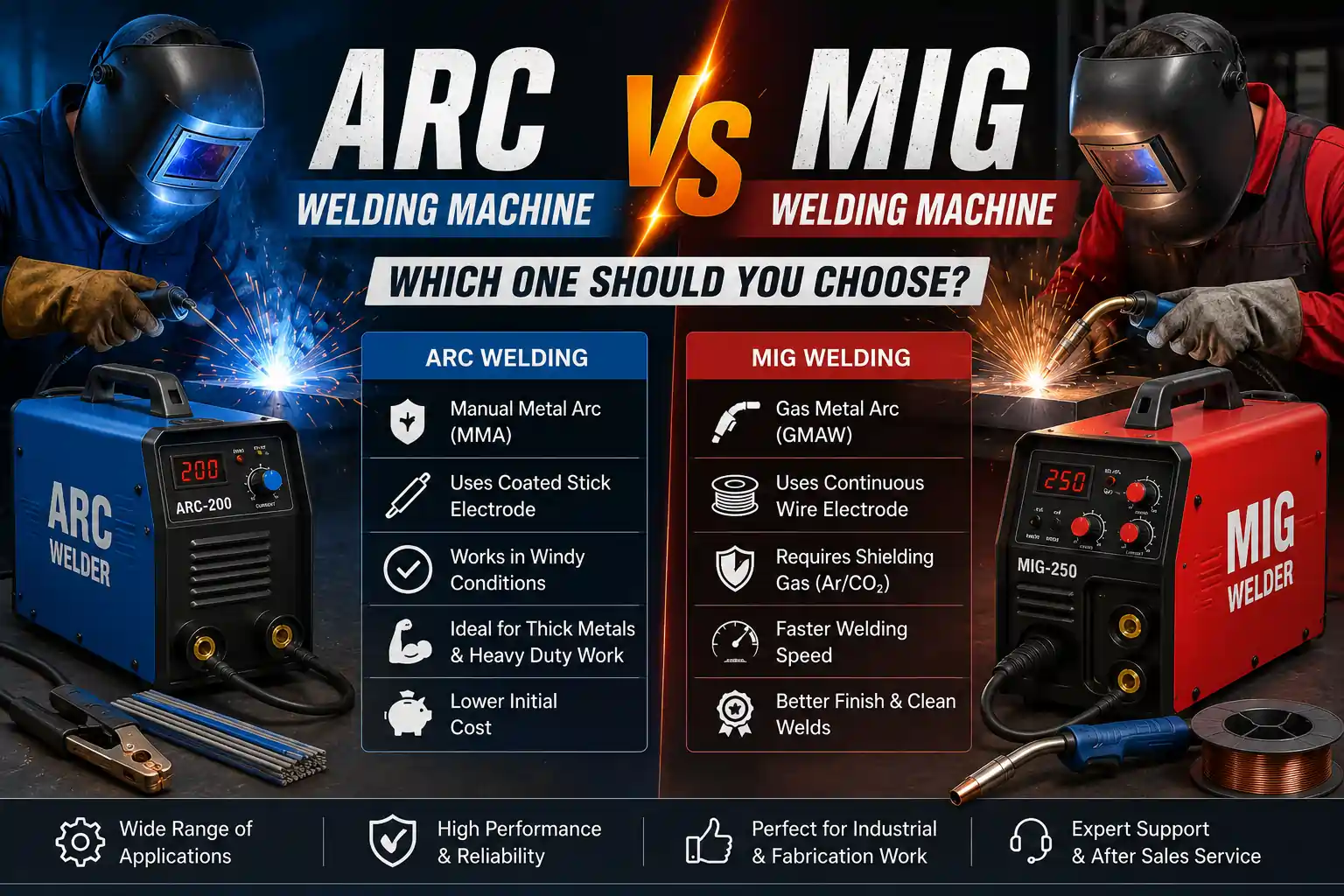
Choosing the right welding machine is one of the most important decisions for any fabricator, workshop owner, contractor, or industrial user. Among the most popular welding technologies available today, ARC Welding and MIG Welding are widely used across different industries. However, many buyers often struggle to decide which one is best for their specific requirements. In this guide, we'll compare ARC and MIG welding machines, explain their advantages and limitations, and help you determine which option is right for your business. What is ARC Welding? ARC Welding, also known as Manual Metal Arc (MMA) Welding or Stick Welding, uses a coated electrode to create an electric arc between the electrode and the workpiece. The heat generated by the arc melts both the electrode and the base metal, creating a strong weld. Advantages of ARC Welding Affordable machine cost Easy to operate in outdoor environments Suitable for thick metal welding Works well in windy conditions Portable and lightweight equipment Low maintenance requirements Applications of ARC Welding Construction projects Structural steel fabrication Maintenance and repair work Heavy industrial applications Agricultural equipment repair What is MIG Welding? MIG Welding (Metal Inert Gas Welding), also known as Gas Metal Arc Welding (GMAW), uses a continuously fed wire electrode along with shielding gas to protect the weld from contamination. MIG welding is known for its speed, efficiency, and clean weld appearance. Advantages of MIG Welding Faster welding speed Cleaner and smoother welds Easy for beginners to learn Minimal slag formation Ideal for thin and medium-thickness metals Higher productivity in fabrication workshops Applications of MIG Welding Automotive industry Manufacturing units Sheet metal fabrication Stainless steel fabrication Production welding Industrial workshops ARC vs MIG Welding: Key Differences Feature ARC Welding MIG Welding Welding Method Stick Electrode Continuous Wire Feed Ease of Use Moderate Easy Welding Speed Slower Faster Weld Appearance Good Excellent Outdoor Use Excellent Limited in Windy Areas Initial Investment Lower Higher Maintenance Low Moderate Best For Thick Metals Thin to Medium Metals Which Welding Machine Should You Choose? Choose ARC Welding Machine If: You have a limited budget You frequently work outdoors You weld thick steel sections You require a portable welding solution Your work involves maintenance and repair jobs Choose MIG Welding Machine If: You need high productivity You want cleaner weld finishes You work mainly indoors You fabricate sheet metal components You require faster welding operations Final Verdict Both ARC and MIG welding machines have their own strengths and applications. If you need a cost-effective, durable, and versatile machine for outdoor and heavy-duty work, an ARC Welding Machine is an excellent choice. On the other hand, if your priority is speed, weld quality, and productivity in a fabrication or manufacturing environment, a MIG Welding Machine will deliver better results. Before making a purchase, consider factors such as material thickness, working environment, production requirements, and budget. Selecting the right welding machine can significantly improve efficiency, weld quality, and long-term operational performance. For professional guidance and a wide range of ARC and MIG Welding Machines, contact Optiweld Industry today.

Read More 5 min read